
Beauty A journal entry
How to Stop Makeup From Creasing Under Your Eyes All Day
How do you stop makeup from creasing under your eyes? The prep, product and setting techniques makeup artists use for smooth, crease-free concealer all day.
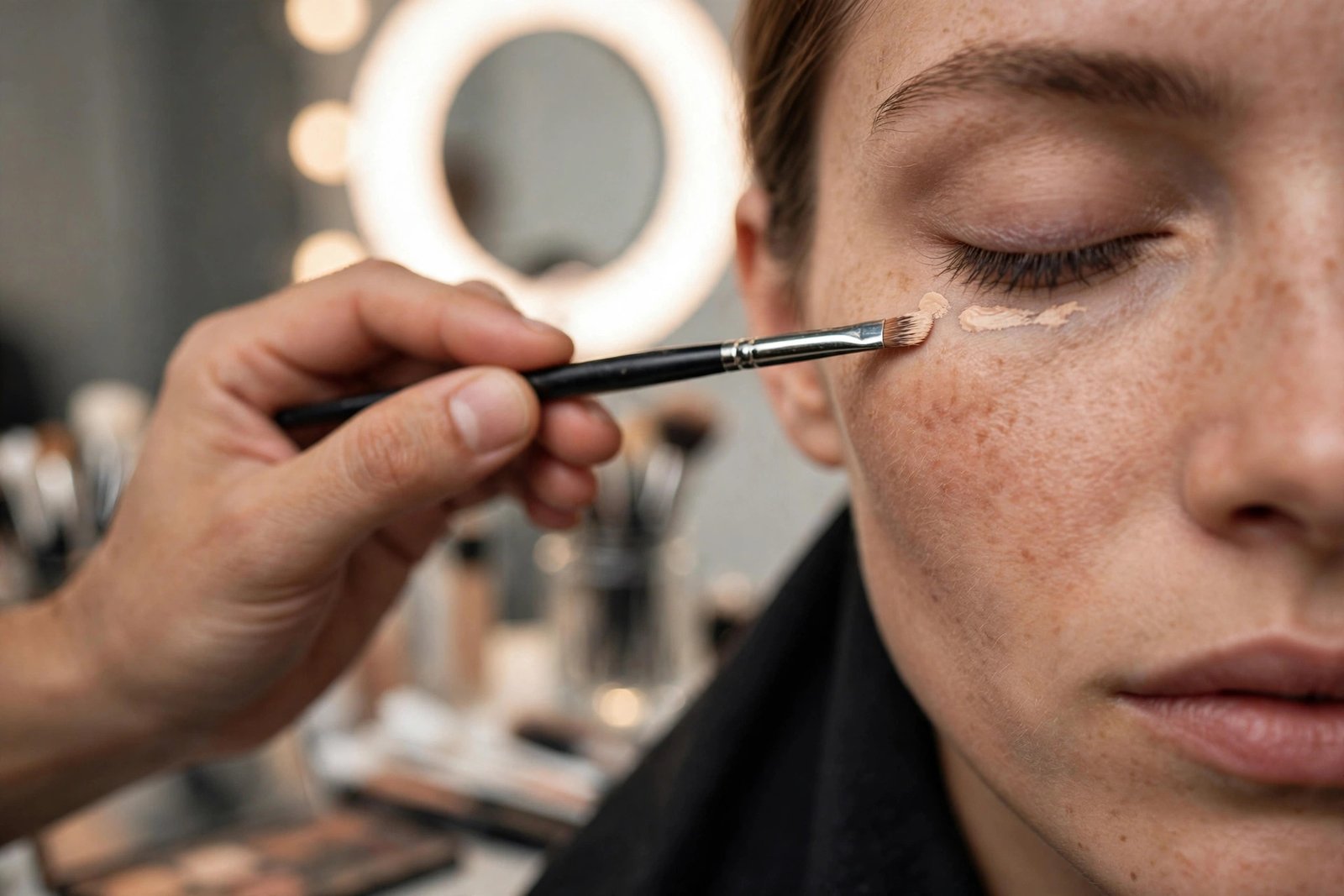
You perfect your concealer in the morning. By lunchtime, it has settled into every fine line under your eyes, drawing attention to exactly what you wanted to hide. Makeup creasing under the eyes is the great leveller — it happens to teenagers and grandmothers, drugstore and luxury wearers alike — because the under-eye area is uniquely challenging: thin skin, constant movement from blinking and expression, and natural oils that break down product. But creasing is not inevitable. It is a prep and technique problem, and it has a prep and technique solution.
This guide explains why concealer creases, the skincare prep that prevents it, the application method makeup artists swear by, and the setting techniques that keep the under-eyes smooth from morning to night.
Why the under-eyes crease
Three factors conspire. First, anatomy: under-eye skin is the thinnest on the face and moves constantly — around 10,000 blinks a day plus every smile and squint. Product pooled in fine lines gets kneaded deeper with each movement. Second, too much product: heavy layers of concealer have nowhere to go but into creases. Third, poor prep: dry, unmoisturised under-eyes grab product unevenly, while overly rich eye cream left unabsorbed makes everything slide.
Formula matters too. Thick, full-coverage concealers crease more than lightweight ones; matte formulas can look cakey on dry under-eyes while dewy ones migrate on oily skin. The goal is the thinnest effective layer of the right formula — not the thickest layer of the most covering one.
Prep: skincare before makeup
Crease-free makeup starts twenty minutes before makeup. Apply eye cream (or a light moisturiser) and let it absorb fully — rushing this step is the single most common cause of creasing, because wet skincare underneath emulsifies concealer. If your eye cream is rich, use less in the morning than at night, or switch to a lightweight gel formula for daytime.
Gently exfoliate the under-eye area once or twice weekly — flaky, dry skin catches product. And stay hydrated; dehydrated under-eyes crease more visibly. A smooth, moisturised, fully-absorbed base is the canvas everything else depends on. For broader skin prep wisdom, our guide to at-home spa treatments covers the weekly routines that keep under-eyes in good condition.
Application: less is more, placed precisely
Apply concealer only where needed — usually the inner corner and the darkest area, not the entire under-eye triangle. Use small dots or short strokes, then blend with a damp sponge or fingertip using pressing motions rather than dragging, which tugs the delicate skin. Build in thin layers: one light layer, assess, then a second only where darkness persists. Two thin layers crease less than one thick one.
Choose your tool deliberately: damp sponges sheer product out beautifully for natural finishes; small brushes offer precision for targeted coverage. Warm the product on the back of your hand first — body heat makes concealer more pliable and blendable. And colour-correct before concealing if darkness is severe: a peach corrector neutralises blue-purple tones so you need less concealer overall — less product, less creasing.
Setting: locking it in place
Setting is what separates morning perfection from midday migration. The professional method: after blending, look upward to smooth the under-eye, then press a small amount of finely-milled translucent powder over the area with a damp sponge or fluffy brush, focusing on where creasing starts. Then — crucially — brush away excess. Baking (leaving heavy powder for minutes) works for photography but looks cakey in real life and on mature skin.
Setting spray as a final step adds longevity, particularly in humid conditions. For touch-ups, never layer fresh concealer over creased old concealer — it compounds the problem. Instead, gently press away excess with a clean fingertip or blotting paper, then pat a tiny amount of fresh product only where needed. Which? concealer reviews test creasing and longevity across price points, proving good behaviour is not exclusive to luxury. And remember the self-care angle: free self-care ideas like proper sleep do more for under-eyes than any product.
Formula choices for crease-prone eyes
If creasing persists despite good technique, the formula may be wrong for you. Dry under-eyes need hydrating, flexible concealers; oily under-eyes need oil-free, setting formulas. Mature skin generally does better with lightweight, luminous textures than full-coverage mattes. Sample before committing — wear a new concealer for a full day, checking at the four-hour and eight-hour marks, because shop lighting flatters everything.
Under-eye skincare that reduces creasing long-term
Makeup technique handles the day; skincare handles the underlying canvas. Consistent moisturisation keeps the under-eye supple so product sits smoothly rather than catching on dry texture. Ingredients like peptides, niacinamide and ceramides support the delicate barrier over time, while gentle, regular use prevents the dehydration that makes every line more visible. Avoid harsh exfoliants near the eyes — the skin is too thin for acids meant for the rest of the face.
Be alert to reactions: the under-eye area is sensitive, and itching, redness or flaking where eye products sit may signal contact dermatitis rather than dryness. The NHS guidance on cosmetic skin reactions helps distinguish irritation from allergy — and switching to fragrance-free eye products resolves most cases. Healthy under-eye skin creases less with any makeup, making skincare the highest-leverage long-term fix.
Adapting technique for mature under-eyes
Mature skin needs a lighter touch everywhere. Choose hydrating, flexible concealers over full-coverage mattes; skip heavy powder in favour of a whisper of finely-milled translucent formula pressed only where creasing starts; and embrace the “less is more” philosophy completely — a sheer brightening layer looks younger than full camouflage. Cream blush and highlighter placed high on the cheekbones draw light upward, reducing the visual weight of the under-eye area.
And reconsider the goal: the aim is rested and polished, not poreless. Makeup that moves naturally with expression looks better at conversational distance than makeup engineered for photographs. Work with your face, not against it.
The five-minute morning eye routine
On rushed mornings, here is the crease-proof minimum: while your skincare absorbs (do something else for two minutes), then pat a tiny amount of concealer only on the darkest points with your ring finger, press a whisper of translucent powder over just the crease-prone zone with a small fluffy brush, and finish with setting spray. Total added time: under two minutes. The secret is not more steps but the right ones — absorbed base, minimal product, targeted setting. Master this compressed routine and even the busiest mornings stay crease-free until evening.
Conclusion
Stopping makeup from creasing under your eyes is a chain of small correct decisions: absorbed skincare, minimal precisely-placed product, thin layered application, and proper setting. No single miracle concealer replaces the technique — but the right technique makes almost any decent concealer behave. Master the prep-to-set sequence once, and the midday mirror check becomes a formality rather than a rescue mission.
Frequently Asked Questions
Why does my concealer crease even when I set it?
Usually too much product, unset skincare underneath, or the wrong formula for your skin type. Try less product, longer skincare absorption time, and a lighter texture before blaming the powder.
Should I use primer under the eyes?
A dedicated eye primer or a thin layer of your face primer can help grip, but it is no substitute for absorbed skincare and thin application. Try it if creasing persists after fixing technique.
Is baking bad for under-eyes?
Heavy baking tends to look cakey and emphasise fine lines in everyday light, especially on mature or dry skin. Light pressing of translucent powder gives the setting benefit without the mask effect.
Does expensive concealer crease less?
Not reliably. Creasing depends more on formula suitability for your skin type and your application technique than on price — many affordable concealers outperform luxury ones for longevity.
§ Further Entries

Is Washing Your Hair Every Single Day Actually Bad for It?
Is it bad to wash your hair every single day? What daily shampooing really does to British hair types, plus when to wash less and when it is fine. Read our guide.
The Most Flattering Haircuts for a Round Face Shape in the UK
What is the best haircut for a round face shape? Flattering cuts, lengths and styling tricks UK stylists recommend to add definition and balance to faces.
What Is Double Cleansing and Does Your Skin Actually Need It?
What is double cleansing and do you actually need it? Who benefits from the two-step cleanse, who can skip it, and how to do it without stripping your skin.