
Beauty A journal entry
How to Choose the Right Foundation Shade for Your Skin Tone
How do you choose the right foundation shade for your skin tone? Undertone matching, in-store testing tricks and avoiding the dreaded tide-mark line for good.

Standing at the foundation counter, faced with forty shades that all look identical under fluorescent lights, is a uniquely modern ordeal. Choose wrong and you get the tide mark — that visible line along the jaw where face meets neck in two different colours. Choose right and your skin just looks like better skin. Learning how to choose the right foundation shade for your skin tone is part colour science, part technique, and entirely learnable — no artistry degree required.
This guide explains undertones (the concept that unlocks everything), how to test shades properly in-store, the jawline test that prevents tide marks, and how to adapt your shade across seasons.
Undertones: the key to everything
Your skin tone is how light or deep your skin is; your undertone is the subtle hue beneath — warm (golden, peachy), cool (pink, red, blue), or neutral (a mix). Foundation goes wrong most often on undertone, not depth: a warm-toned person in a cool foundation looks ashy or pink; a cool-toned person in warm foundation looks orange. This is why “it looked fine in the bottle” fails — you matched depth but missed undertone.
Find your undertone with three quick tests. The vein test: greenish veins suggest warm, blue or purple suggest cool, a mix suggests neutral. The jewellery test: gold flatters warm undertones, silver flatters cool. The white test: hold pure white fabric near your face — if your skin looks yellowish against it, you are warm; pinkish, cool. None is definitive alone; two out of three agreeing is reliable. Our guide to colours that suit pale skin tones applies the same undertone logic to wardrobes.
How to test shades in-store properly
Never swatch on your hand — hand skin rarely matches face undertone. Test three candidate shades as stripes along your jawline, blending slightly, then walk to natural daylight (near the shop entrance or a window). Artificial lighting lies; daylight tells the truth. The right shade disappears into your skin — no line, no mask effect. If you are between shades, choose the slightly lighter one; foundation oxidises (darkens) on many people through the day.
Ask for samples. Most counters and stores — from Boots to Space NK — will decant samples if you ask, and wearing a shade for a full day through oxidisation, oil breakthrough and evening lighting is the only true test. Which? foundation reviews test wear and oxidisation across popular formulas, which helps narrow the field before you swatch.
Formulas and finishes: matching texture to skin
Shade is only half the match; formula must suit your skin type. Oily skin needs oil-free, matte or long-wear formulas that resist midday breakdown; dry skin wants hydrating, luminous or serum foundations that do not cling to flakes; combination skin often does best with a satin-finish medium coverage. Mature skin generally prefers lighter, hydrating formulas — heavy matte foundation settles into every line.
Coverage is a separate choice from shade: sheer for evening out, medium for everyday polish, full for occasions or significant discolouration. A perfect shade in the wrong formula still looks wrong, so sample the texture as carefully as the colour.
Avoiding the tide mark and other shade sins
The tide mark happens when foundation stops at the jawline in a different colour from the neck. Prevention is threefold: match to your jawline/neck area (not your forehead, which is often darker, or your cheek, which may be redder), blend downward past the jaw onto the neck, and check in daylight. If your neck is significantly paler than your face — common in Britain — match the neck and let bronzer add warmth back to the face.
Other classic errors: buying the summer shade in winter (keep two shades or mix), ignoring oxidisation (test for a full day), and choosing full coverage to “fix” texture — heavy foundation emphasises texture; skincare and primer address it. Affordable experimentation helps: the UK’s best affordable high-street brands offer impressive shade ranges at prices that make trial and error painless.
Seasonal shade shifting
Most British skin shifts one shade between February pallor and August glow. Rather than buying a whole new bottle, keep your winter shade and mix in a drop of a darker shade (or a liquid bronzer) as colour develops — or vice versa heading into autumn. Some brands sell shade-adjusting drops specifically for this. And remember SPF: unprotected sun exposure deepens skin unevenly, making shade-matching harder; daily sunscreen keeps your canvas consistent.
Undertone shifts and tricky cases
Some skin defies easy categorisation. Surface redness (rosacea, flushing) masks undertones — neutralise the redness mentally and judge by the jawline and neck, not the cheeks. Very deep skin can make undertone tests harder to read; the jewellery test and the brightening test (which shades make your face light up?) work better than the vein test. And if you are truly neutral, you have the easiest job — most shades in your depth will work, so choose by finish and formula instead.
Reactions to makeup deserve attention too: persistent itching, redness or breakouts where foundation sits may indicate sensitivity to fragrances or preservatives rather than a shade problem. The NHS advice on contact dermatitis from cosmetics explains how to identify and manage reactions — switching to fragrance-free, hypoallergenic formulas usually resolves them.
Building a foundation wardrobe
Most people eventually need two foundations, not one: a lighter everyday formula for workdays and a fuller-coverage or longer-wear option for evenings and events. Add a shade-adjusting drop set (lightening and darkening) and you can fine-tune across seasons without buying new bottles quarterly. Keep the oldest bottle’s purchase date in mind — liquid foundations typically last 12 months once opened, and expired formula oxidises worse and irritates more.
Store foundations away from heat and light (not on a sunny windowsill), pump rather than pour where possible, and never share — eye infections aside, shared base products transfer bacteria. A small, well-maintained kit outperforms a drawer of half-used mismatches.
Drugstore vs luxury: does price predict match?
An uncomfortable truth: expensive foundations are not easier to shade-match — they just cost more to get wrong. The high street now offers shade ranges rivalling luxury (40+ shades is common at Boots and Superdrug), and affordable brands often have better undertone labelling. Where luxury sometimes wins is formula elegance and wear time — but shade matching is about the colour in the bottle, not the price on it. Sample across price points without prejudice: the perfect match at £9 beats the near-miss at £40 every time. Your face does not know what you paid.
Conclusion
Choosing the right foundation shade for your skin tone comes down to undertone first, daylight testing second, and formula matched to skin type third. Swatch on the jawline, walk to the window, wear samples for a day, and blend past the jaw. Get those steps right and foundation stops being a mask you hope nobody notices — it becomes the invisible polish that lets the rest of your makeup shine.
Frequently Asked Questions
Should foundation match my face or my neck?
Your neck and jawline area. Faces are often redder or darker than necks; matching the neck prevents the tide-mark line where the two meet.
Why does my foundation look orange by afternoon?
Oxidisation — the formula darkening as it reacts with skin oils and air. Test shades for a full day before buying, and consider formulas marketed as non-oxidising.
How do I know my undertone?
Combine the vein test, jewellery test and white-fabric test. Two out of three agreeing gives a reliable answer; when in doubt, neutral undertones suit most people.
Can I mix two foundation shades?
Yes — mixing is standard practice among makeup artists, especially for seasonal transitions. Mix on the back of your hand and keep notes on your ratio.
§ Further Entries

Is Washing Your Hair Every Single Day Actually Bad for It?
Is it bad to wash your hair every single day? What daily shampooing really does to British hair types, plus when to wash less and when it is fine. Read our guide.

The Most Flattering Haircuts for a Round Face Shape in the UK
What is the best haircut for a round face shape? Flattering cuts, lengths and styling tricks UK stylists recommend to add definition and balance to faces.
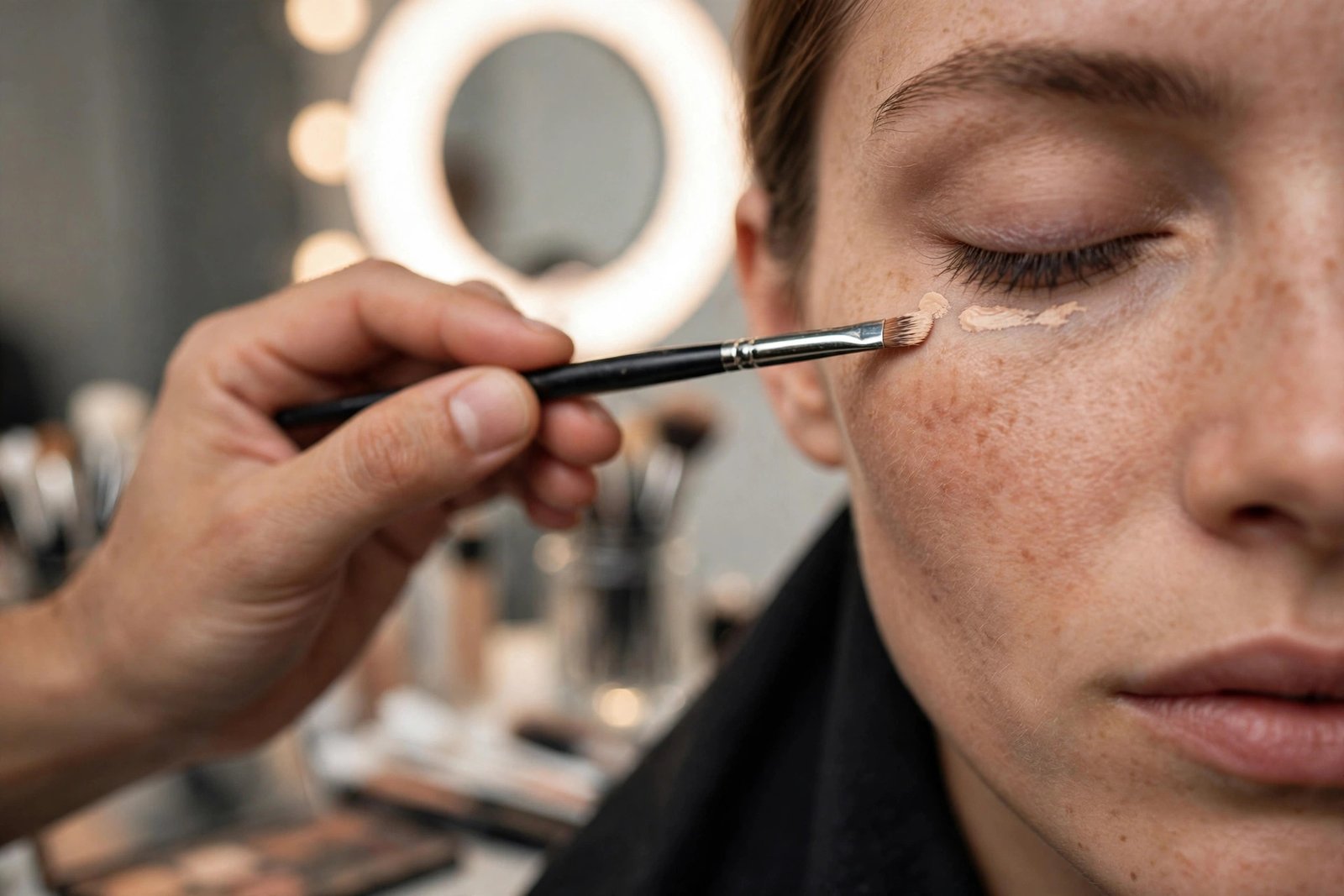
How to Stop Makeup From Creasing Under Your Eyes All Day
How do you stop makeup from creasing under your eyes? The prep, product and setting techniques makeup artists use for smooth, crease-free concealer all day.