The waiting lists tell the story: in many British cities, aspiring allotment holders wait years — sometimes the better part of a decade — for a plot. During the pandemic, applications surged several hundred percent, and they never fully fell back. Something about growing your own food on a patch of rented land has captured the national imagination. But an allotment is also a serious commitment of time, money and weekends, with rules, inspections and the occasional politics. If you are asking is it worth getting an allotment in the UK, here is the honest accounting: the costs, the waiting lists, the workload, and the rewards that keep plot-holders renewing year after year.
What an allotment actually is (and costs)
Allotments are plots of land rented — usually from the local council or a private allotment association — for growing fruit and vegetables. A traditional full plot is 250 square metres (about 10 poles, the old measurement), though most beginners now take half plots, which are far more manageable. Rents are astonishingly cheap by any other land standard: typically £25–£100 a year depending on region, with London and the South East at the top end and northern councils sometimes under £30. Some councils charge by plot size, some flat rates; water charges may be included or added.
The legal framework is genuinely interesting: the Allotment Acts (1908–1950) place duties on councils to provide allotments where demand exists, and plot-holders have real protections. In practice, provision varies wildly — some councils maintain thriving sites with waiting lists managed fairly; others have let sites decline. The National Allotment Society is the representative body, offering advice, insurance, seed schemes and advocacy — membership (£3-ish via associations) is worth it. Note the cultivation rules: most agreements require a percentage of the plot (often 75%) to be cultivated, with inspections and warnings for neglected plots. An allotment is a commitment, not an option on future enthusiasm.
The waiting list reality
Here is the hard part. Demand has outstripped supply for over a decade: the National Allotment Society has reported waiting lists in the tens of thousands nationally, with average waits measured in years in cities — and much longer in London boroughs, where some lists are effectively closed. The pandemic surge made it worse. If you want an allotment, apply now — to every site within reach, not just the nearest. Lists move: people give up plots, councils split full plots into halves and quarters, and new sites occasionally open.
While you wait, do not idle. Grow at home — the skills transfer directly, and our guides to raised beds and small gardens are the perfect apprenticeship. Volunteer on a community garden or offer to help an existing plot-holder — many older holders welcome help in exchange for produce and knowledge, and it is the fastest education available. Consider alternatives: community gardens, city farms, garden-share schemes (where you grow in someone else’s garden for a share of the produce), and private allotment sites run by associations or landowners, which sometimes have shorter lists than council sites.
Jumping the queue, legitimately
Taking a neglected, overgrown plot — the ones nobody wants — often means immediate availability. Councils struggle to let weedy plots, and a new holder who clears one is doing everyone a favour. It is hard work (think strimmer, tarpaulin, patience), but experienced holders will tell you the worst plots become the best ones: years of neglect often means years of rested, fertile soil underneath the weeds.
The workload: honest hours
A half plot needs roughly 3–5 hours a week in the growing season (April–September), less in winter. That is the realistic figure, not the enthusiastic March estimate. The work is seasonal and spiky: spring is frantic (sowing, planting, weeding), midsummer is harvesting and watering, autumn is clearing and manuring, winter is planning and maintenance. Miss two weeks in June and the weeds will stage a coup; the allotment rewards consistency over intensity.
The first year is the hardest — clearing, establishing beds, learning the site’s soil, sun and drainage, discovering which corner floods and which bakes. Year two is when it clicks: rotations established, perennials (rhubarb, asparagus, fruit bushes) settling in, the shed organised, neighbours known. Neighbours are the allotment’s secret asset: the collective knowledge on any established site dwarfs any book — which variety actually works here, when the frost pockets strike, who has spare seedlings. Allotment culture is famously generous with advice, plants and produce. The politics exist (committees, rules disputes, the eternal shed-size debate) but are mostly benign and occasionally entertaining.
The harvest maths: does it pay?
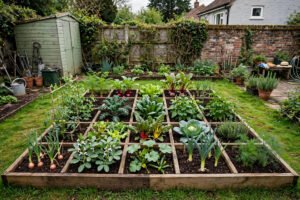
Strictly financially: a productive half plot can grow £500–£1,000+ of produce a year against costs of maybe £100–£200 (rent, seeds, compost, tools amortised). High-value crops (soft fruit, asparagus, salads, herbs) tilt the maths strongly; potatoes and onions less so. But the real accounting is not financial. Quality: produce picked minutes before eating, varieties chosen for flavour not shelf life. Health: hours of outdoor physical activity that does not feel like exercise. Mental health: the evidence for gardening’s psychological benefits is now substantial — allotments are prescribed by GPs under social prescribing schemes. Community: a social world spanning ages and backgrounds, increasingly rare and genuinely precious.
The honest costs beyond money and time: the glut problem (you will give away courgettes to people who cross the street to avoid you), the holiday problem (allotments need watering in August — arrange cover or grow drought-tolerant crops), and the weather (British summers will break your heart at least once). Weigh these against the rent — often less than a monthly streaming subscription — and the maths of “worth it” becomes clear. The RHS allotment guidance covers the practicalities authoritatively.
The bottom line
An allotment in the UK costs £25–£100 a year, demands 3–5 hours a week in season, and repays the investment in produce worth many times the rent — plus exercise, mental health, community and food that tastes like food is supposed to. The catch is the waiting list: apply everywhere now, grow at home meanwhile, and consider taking on a neglected plot to jump the queue. Worth it? Ask any plot-holder in October, arms full of harvest, and watch them laugh at the question.
Frequently Asked Questions
How much does an allotment cost in the UK?
Typically £25–£100 per year depending on region and plot size — London and the South East cost most. Water charges may be extra. Half plots (the sensible beginner size) cost proportionally less.
How long is the waiting list for an allotment?
Often years in cities — some London lists are effectively closed. Apply to every site within reach now; lists do move, and neglected plots are often available immediately.
How much time does an allotment take?
A half plot needs roughly 3–5 hours a week in the growing season (April–September), less in winter. Consistency matters more than intensity — miss two weeks in June and the weeds take over.
Can I keep chickens or bees on an allotment?
Often yes — many sites allow hens (cockerels usually banned) and bees, subject to the site’s rules and sometimes council permission. Check the specific tenancy agreement before investing.
What should I grow first on an allotment?
Potatoes (they break up new ground), courgettes, beans, salads and onions — forgiving, productive crops that build confidence. Plant fruit bushes and rhubarb early too; perennials reward patience.