
Beauty A journal entry
The Correct Order to Apply Skincare Products, Explained
Confused about the correct order to apply skincare products? The simple thinnest-to-thickest rule, morning vs evening routines and common layering mistakes.
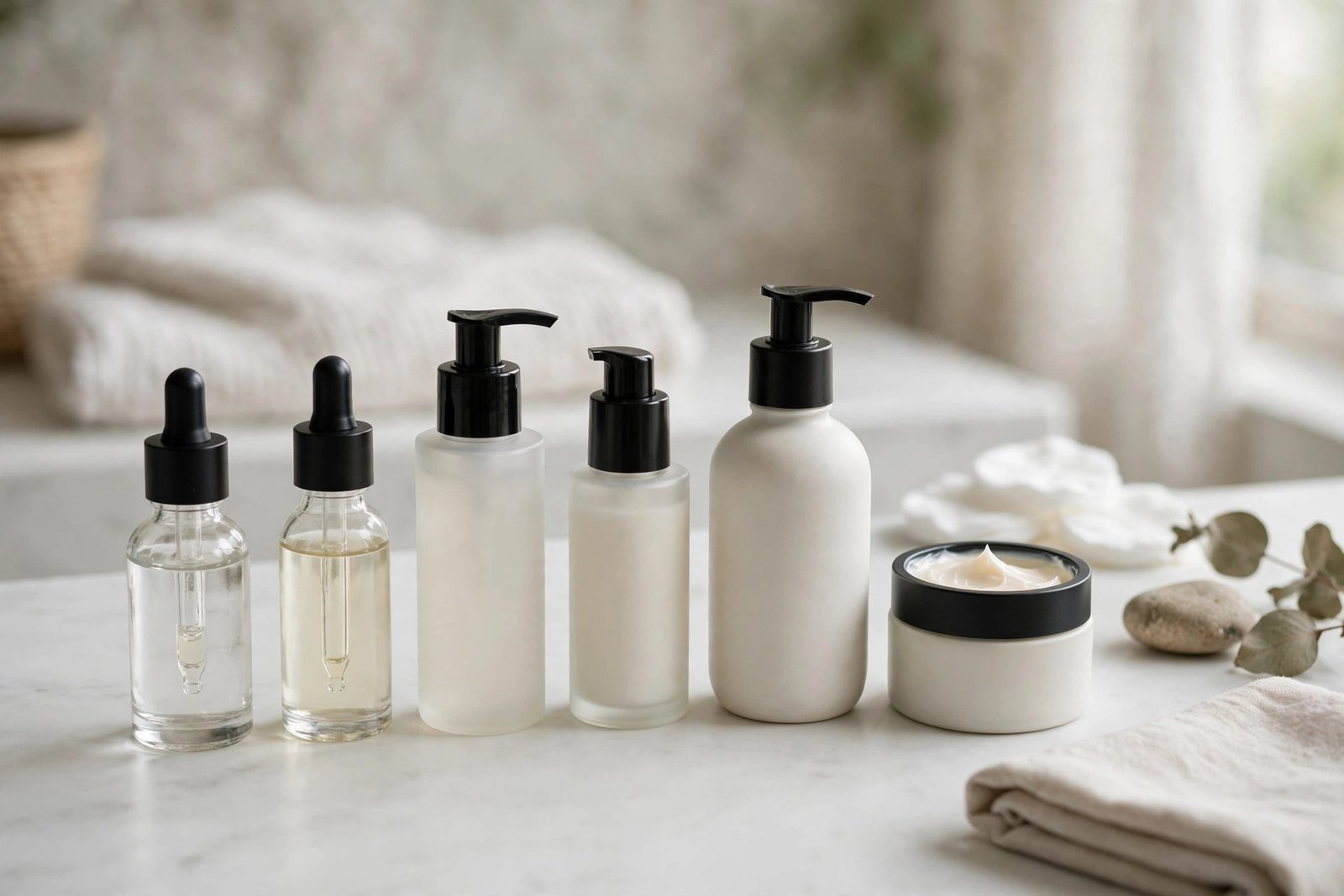
Serum before moisturiser or after? Does SPF go on before or after makeup? And where on earth does toner fit? The correct order to apply skincare products confuses almost everyone at first — and it matters, because layering in the wrong sequence can block absorption, pill your makeup, or waste expensive products. Fortunately, the underlying principle is beautifully simple, and once you learn it, you will never need a layering chart again.
This guide explains the golden rule of skincare layering, the exact morning and evening orders, where treatments and actives slot in, and the common layering mistakes that undermine good products.
The golden rule: thinnest to thickest
Apply products from the thinnest, most watery texture to the thickest, most occlusive. Lightweight serums penetrate best on bare skin; heavier creams and oils then seal everything beneath them. Reversing the order — heavy cream first, watery serum after — traps the serum on top of an occlusive barrier where it cannot absorb properly. Texture is your guide: if you are unsure, rub a drop between your fingers — the runnier product goes first.
The second principle: water-based before oil-based. Oils repel water, so an oil applied early blocks everything water-based layered over it. This is why facial oils always come near the end of a routine, never at the start. The British Association of Dermatologists’ skincare resources support this commonsense approach over rigid multi-step dogma.
The morning order, step by step
Morning routines protect; evening routines repair. Here is the standard morning sequence:
- 1. Cleanser (or lukewarm water for dry skin) — removes overnight oil and residue.
- 2. Toner or essence (optional) — hydrating layers that prep skin for serums.
- 3. Treatment serum — vitamin C is the classic morning active for antioxidant protection.
- 4. Eye cream (optional) — dabbed gently around the orbital bone.
- 5. Moisturiser — seals in hydration for the day.
- 6. SPF — always last (before makeup), broad-spectrum SPF 30+.
Wait 30 to 60 seconds between layers — not for mystical absorption reasons, but to prevent pilling. If products ball up, you are either rushing layers or using incompatible textures (silicone-heavy products over watery ones are the usual culprit).
The evening order, step by step
Evenings are for cleansing thoroughly and treating concerns:
- 1. First cleanse — oil cleanser or micellar water to dissolve SPF and makeup.
- 2. Second cleanse — gentle water-based cleanser for actually clean skin.
- 3. Exfoliant or treatment (2–3 evenings weekly, not daily) — AHAs, BHAs or retinoids go on clean, dry skin for maximum efficacy.
- 4. Hydrating serum — hyaluronic acid or niacinamide on non-exfoliant nights, or layered after.
- 5. Eye cream (optional).
- 6. Moisturiser — slightly richer than your morning one if you like.
- 7. Facial oil (optional) — the final seal, pressed in last.
On retinoid nights, simplify: cleanse, wait until skin is fully dry, apply retinoid, then moisturise. Buffering (moisturiser before retinoid) reduces irritation if your skin is sensitive. Never layer strong actives together casually — retinoids plus acids plus vitamin C in one routine is a recipe for a damaged barrier.
Where tricky products fit
Spot treatments go after serums but before moisturiser, so they sit close to the skin. Masks slot in after cleansing: clay masks before serums, sheet masks after serums (they drive product in). Lip treatments and hand cream are outside the facial order entirely — apply whenever. And makeup primer sits between SPF and foundation, never before skincare.
Self-care rituals follow the same logic — our guide to planning a spa day at home sequences treatments so each step prepares for the next. For the truly time-pressed, free self-care ideas prove that effective routines need not be elaborate or expensive.
Common layering mistakes
Applying SPF before moisturiser is the most consequential error — sunscreen must form an even film as the outermost layer to work properly. Mixing niacinamide and direct acids in the same routine can cause flushing in sensitive skin (alternate nights instead). Using vitamin C and retinoids simultaneously often irritates; vitamin C earns its keep in the morning, retinoids at night. And layering multiple silicone-heavy products causes the dreaded pilling — if your makeup balls up by noon, simplify the layers underneath.
When in doubt, the NHS skincare guidance reminds us that consistency with a few well-chosen products beats elaborate layering every time.
Layering for specific concerns
Once the basic order is second nature, you can fine-tune for your goals. For anti-ageing: vitamin C serum in the morning (antioxidant protection under SPF), retinoid at night on dry skin, moisturiser to seal both. For acne-prone skin: salicylic acid treatment after cleansing on alternate evenings, lightweight non-comedogenic moisturiser, and never skip SPF — unprotected sun worsens post-acne marks. For hyperpigmentation: vitamin C or alpha arbutin in the morning, and patience — pigment fades over months, not weeks.
For sensitive skin, less is more: fewer layers, fragrance-free everything, and new products introduced singly with patch tests. And for everyone: the order never changes the fundamentals — cleanse well, treat specifically, moisturise appropriately, protect always. Concerns change the products; they never change the sequence.
When to break the rules
Every rule has exceptions worth knowing. The “thinnest to thickest” rule bends for prescription topicals, which your dermatologist may want applied first regardless of texture — medical instruction overrides cosmetic convention. Buffering (moisturiser before a strong retinoid) deliberately breaks the order to reduce irritation, a worthwhile trade. And on mornings when you are late, a combined SPF-moisturiser beats a perfect seven-step routine you skip — the best order is the one you actually follow.
Rules serve results, not the other way round. Learn the standard order, understand why it works, then adapt intelligently to your skin, your prescriptions and your life.
The minimalist’s layering order
If the full routine feels like too much, here is the absolute minimum that still works, in order: cleanser, moisturiser, SPF (morning); cleanser, moisturiser (evening). That is three products in the morning, two at night — and it covers the fundamentals that deliver most results. Add one treatment serum between cleansing and moisturising when a specific concern arises. This stripped-back order follows the same thinnest-to-thickest logic, proves that effective skincare need not be elaborate, and is the perfect starting point before any expansion. Master the minimum first; complexity is optional.
Conclusion
The correct order to apply skincare products boils down to two rules: thinnest to thickest, and SPF last in the morning. Everything else — the essences, the eye creams, the oils — slots into that framework logically. Learn the principle rather than memorising charts, keep your routine to what you will actually do daily, and let each layer do its job in sequence. Order will not rescue bad products, but it ensures good ones perform at their best.
Frequently Asked Questions
Does serum go before or after moisturiser?
Before. Serums are thinner and need direct skin contact to absorb; moisturiser then seals them in. The only exception is buffering strong retinoids, where moisturiser first reduces irritation.
Where does SPF go in the routine?
Last in the morning skincare routine, after moisturiser and before makeup. Sunscreen needs to form an even outer film to protect properly.
Can I mix products together to save time?
Mixing moisturiser with a drop of facial oil or foundation is fine. Do not mix actives together — combined acids, retinoids and vitamin C in one cocktail risks irritation and reduced efficacy.
How long should I wait between layers?
About 30 to 60 seconds — enough for each layer to settle. You do not need to wait 15 minutes between steps; that is a myth. Just avoid rubbing a new layer into a still-wet one.
§ Further Entries

Is Washing Your Hair Every Single Day Actually Bad for It?
Is it bad to wash your hair every single day? What daily shampooing really does to British hair types, plus when to wash less and when it is fine. Read our guide.

The Most Flattering Haircuts for a Round Face Shape in the UK
What is the best haircut for a round face shape? Flattering cuts, lengths and styling tricks UK stylists recommend to add definition and balance to faces.
How to Stop Makeup From Creasing Under Your Eyes All Day
How do you stop makeup from creasing under your eyes? The prep, product and setting techniques makeup artists use for smooth, crease-free concealer all day.